
A Child Of My Own; Interview with Maite Alberdi
At Docfest this year there was one film that stood head and shoulders above the rest for me. It captured everyone’s attention, sparked numerous conversations, and made a big impression on those of us who saw it. It was called A Child Of My Own, directed by Maite Alberdi, and it is coming to Netflix on August 13th.
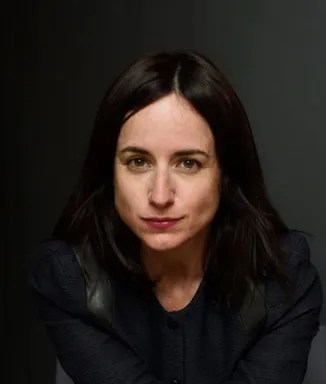
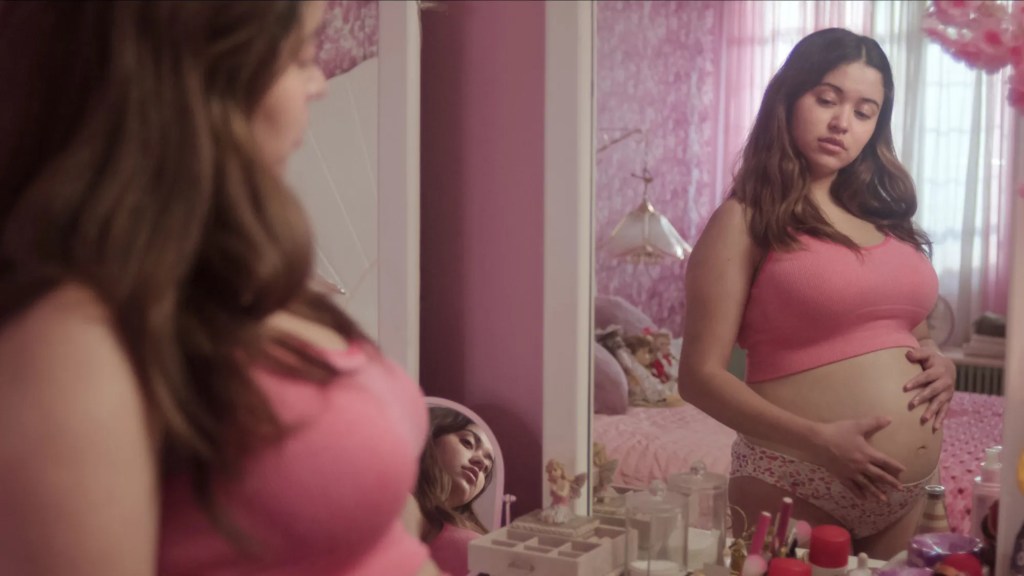
A young Mexican woman fakes a pregnancy, but then gradually begins to regret the growing web of deceit required to maintain the illusion. What happens as the film unfolds is so gripping and so incredible, that it feels almost impossible to believe that it isn’t fiction, yet it is a genuinely true story. The director, Maite Alberdi, is now celebrated world-wide as one of our most distinctive documentary voices. With two Academy Award nominations, and a string of acclaimed works to her name, I managed to meet up with her when she was here to promote the film, and have a quick chat about A Child Of My Own, as well as a few of the other films that have defined her career so far.
How did you come across this incredible story?
I first met Alejandra, the woman at the heart of this story, when I was doing some research and just became obsessed with her story. How can a woman fake a pregnancy and not be found out? As her pretence went on, more and more people ended up being involved and affected by it, and the fallout from what she ended up doing was unbelievable. She had had several miscarriages, but wasn’t offered any help with the toll this took on her mental health. As she was recovering on the miscarriage ward, she was even placed with mothers and their new-born babies. It was made much worse because of the expectation from family to have children in Mexican culture. There were so many points in her story where someone should have reached out or stepped in to help her, but she was left to cope totally on her own.
I’m keen not to reveal too much about what happens in the film, so people watching can be as shocked and amazed as I was. The less viewers know, I think, the more amazing it is as her story unfolds.
I studied cinema before making documentaries, and my training focused on the craft of fictional story telling. The one thing they teach you is how the hero has to go on some sort of journey, and change in some way. When you’re making a documentary, you realise that this rarely happens in real life. As you’ll see in this film, despite everything, some people never change, and are all the more fascinating for it. As much as this is a story about one person’s choices, it’s also a story of how the social system in Mexico failed. I really want the film to speak to women in Latin America about the heavy and pervasive social pressure to conform and meet expectations, which is so hard and so common, but so rarely discussed.
Have audiences in Latin America seen the film yet?
I’ve shown it at a festival in Mexico. The Q&A after the film was difficult and very upsetting. There were so many women who were crying and telling their own stories about the different ways they were under pressure to have families. Hopefully the film addresses the question of how and why we have so much expectation of women to build a family, and what that really costs.
The film of yours that most people will have heard of is probably The Mole Agent, from 2021, as it was nominated for an Academy Award. I thought it was a beautiful revelation of relationships and sadness, but also the unbounded joy to be found in a retirement home. What can you tell me about how the film came about?
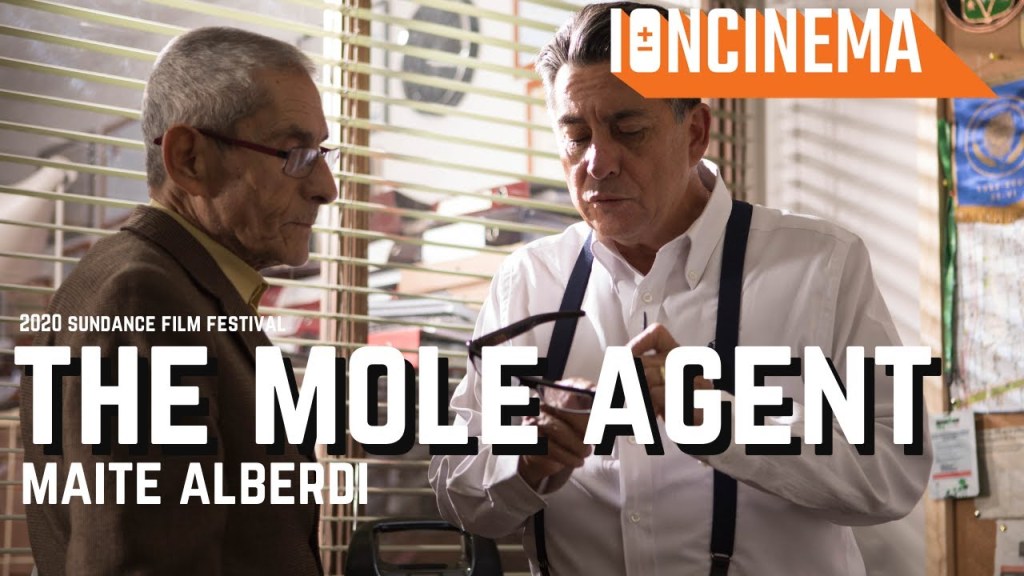
It began when a detective was hired to investigate what relatives suspected was a case of elder abuse, in an old people’s home. The intention was that he would live inside the home to spy on the others. We had a retired police officer ready to go in and play the part, but he broke his hip just as we were about to start filming, so we ended up hiring another old man, from an advert we placed in a newspaper. He turns out to be the worst spy in the world, but luckily also the best character we could have hoped for. It was very nerve-racking, as we never really knew if the film would work throughout all the time we were filming. We pretended we were there to make a documentary about old people, so we were embedded in the home when he arrived. But he was so hopeless, every day we were convinced our cover would be blown. It was a perfect example of how a documentary often turns out to be a totally different film at the end than the one you set out to make. To me making documentaries are a way of preparing for life. I live so many experiences with my characters that it becomes my own experience. People say that the cinema weaves a fabric of experience for the audience, but as a documentary film-maker I feel that it does exactly that for me. I share my experience through the films I make.
Your films seem to take so long to film, that I imagine you have to be working on several projects at the same time.
Yes. You can never push the reality. It takes time for it to be revealed. You cannot turn up with a camera for 30 days and expect the film to be finished. My work has to move at its own pace. I do find myself filming more than one project at once or I might be juggling research, editing and filming on three different projects at the same time.
Films of yours all seem to be characterised by you showing the audience an intimate portrait of small worlds, like for example your first feature, The Lifeguard, and later on in The Grown Ups.
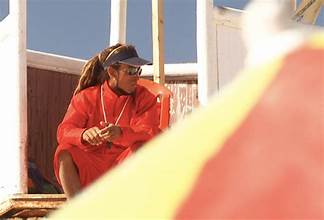
The Lifeguard follows a man who works at the most dangerous beach in Chile, and who is afraid of water. He doesn’t see this as a problem, as his job is mainly to prevent, not to save. His partner takes naps all day, but luckily is also the one who is very good at the rescues. It is all about building a relationship with the people you are filming. I have to really love them, as I spend so much time with them. And also in the film I restrict the filming so we never see the sea. The Grown-Ups is about a group of people with Down’s Syndrome, who are in their 50s but still go to school, and are still treated like children. No-one features in the film who doesn’t have Down’s Syndrome. I restricted this deliberately to show how they are living in a world, totally isolated from society, for their entire lives. As I film with a single camera, I have to stay focused on one person, but that means I can get perfect reaction shots that I would not otherwise have.
In your film, Tea Time, you film a group of elderly ladies, one of whom was your grandmother, who take it in turns to have tea at each others houses and chat.
Yes. I started by asked them to host it in just one place, to make editing much easier, but they said ‘are you kidding? Hosting the tea party is the most important day of our month.’ It was a film where I had to distance myself from the things they talked about, as their opinions were not mine. But I do love them all, and it’s important to spend time with people who don’t always have the same outlook on life as you do. Often they don’t express opinions explicitly, but luckily for me, I soon realised they often said the same thing again and again over the months and years. It gave me a freedom in the editing to tell a story, using only one camera. We edited together responses to make conversations which are actually words that were sometimes spoken years apart. Is that fake? I would say no. The rule of a good friendship is never to say to someone, ‘you already told me that’. The conversations are constructed through editing, but the film is all their own words.
I understand you have worked with the same crew for the last 15 years.
Yes, all of us know what to do and film intuitively. I look at film-makers who make both fiction films and documentary films as artists, but artists who are working in very different ways. One is a painter, the other a sculptor. Fiction directors have a wide canvas, where they add information to construct their characters, adding colour until the character appears. Documentary directors do completely the opposite. I am faced with a big rock in-front of me – reality. Reality is so big that you can’t film everything. I take away the rock until the character appears. As a film-maker I cannot tell everything, instead I tell a small part of them. You need to trust that time will give you the scenes you need, but you need to be patient to let the story tell itself. You cannot moderate life.


Leave a Reply